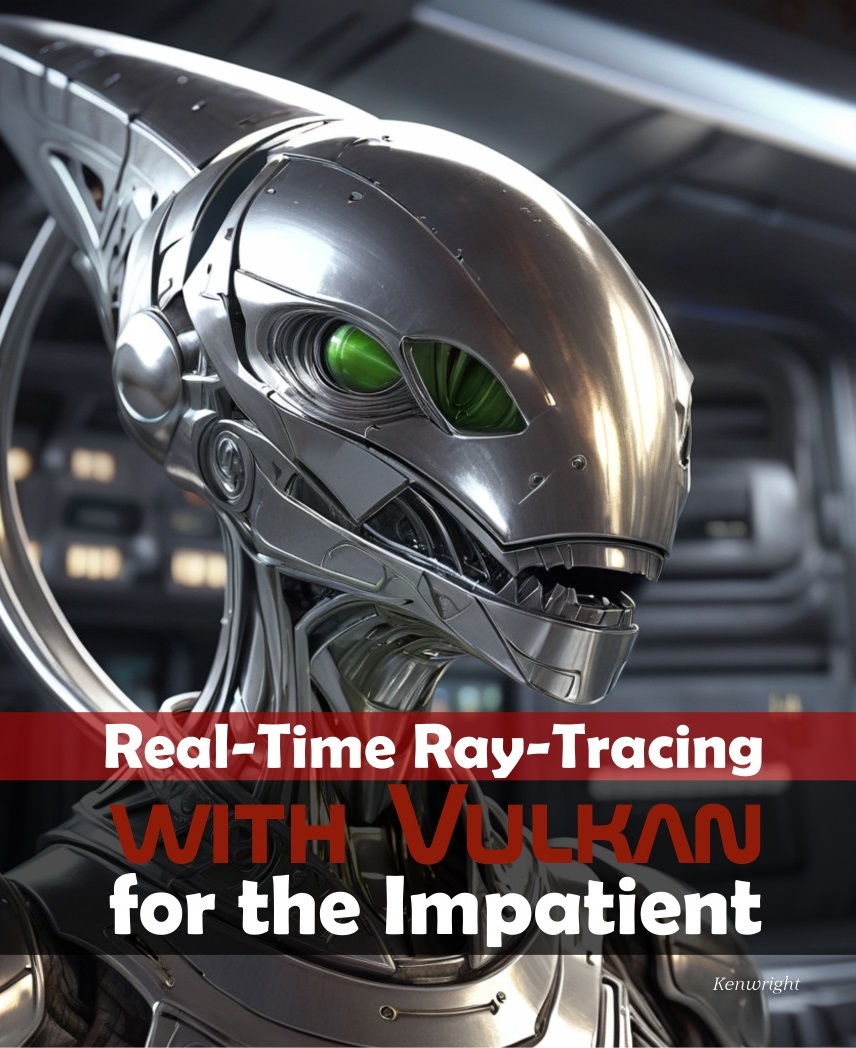
Real-Time Ray-Tracing with Vulkan for the Impatient
If you want practical clarity, this is a strong pick: graphics, compute, shader, ray-tracing presented in a way that turns into decisions, not just notes.
The book rewards re-reading. On pass two, the shader connections become more explicit and surprisingly rigorous.
Noah Kim • Indie Dev
Sep 26, 2026
What surprised me: the advice doesn’t collapse under real constraints. The vulkan sections feel field-tested.
Benito Silva • Analyst
Sep 17, 2026
What surprised me: the advice doesn’t collapse under real constraints. The ray-tracing sections feel field-tested.
Maya Chen • UX Researcher
Sep 19, 2026
If you care about conceptual clarity and transfer, the strange tie-ins are useful prompts for further reading.
Zoe Martin • Designer
Sep 18, 2026
Okay, wow. This is one of those books that makes you want to do things. The ray-tracing framing is chef’s kiss.
Noah Kim • Indie Dev
Sep 26, 2026
I’m usually wary of hype, but Real-Time Ray-Tracing with Vulkan for the Impatient earns it. The ai chapters are concrete enough to test.
Samira Khan • Founder
Sep 22, 2026
The book rewards re-reading. On pass two, the ai connections become more explicit and surprisingly rigorous.
Maya Chen • UX Researcher
Sep 25, 2026
From a structural standpoint, the text creates a coherent ladder: definitions → examples → constraints → application. That’s why the ray-tracing arguments land.
Omar Reyes • Data Engineer
Sep 23, 2026
I’m usually wary of hype, but Real-Time Ray-Tracing with Vulkan for the Impatient earns it. The graphics chapters are concrete enough to test.
Maya Chen • UX Researcher
Sep 17, 2026
If you care about conceptual clarity and transfer, the trek tie-ins are useful prompts for further reading.
Benito Silva • Analyst
Sep 24, 2026
I’m usually wary of hype, but Real-Time Ray-Tracing with Vulkan for the Impatient earns it. The shader chapters are concrete enough to test.
Maya Chen • UX Researcher
Sep 19, 2026
From a structural standpoint, the text creates a coherent ladder: definitions → examples → constraints → application. That’s why the vulkan arguments land.
Sophia Rossi • Editor
Sep 21, 2026
If you care about conceptual clarity and transfer, the 2026 tie-ins are useful prompts for further reading.
Ethan Brooks • Professor
Sep 24, 2026
This is the rare book where I highlight a lot, but I also use the highlights. The compute sections feel super practical.
Sophia Rossi • Editor
Sep 18, 2026
The book rewards re-reading. On pass two, the shader connections become more explicit and surprisingly rigorous.
Noah Kim • Indie Dev
Sep 18, 2026
What surprised me: the advice doesn’t collapse under real constraints. The compute sections feel field-tested.
Samira Khan • Founder
Sep 21, 2026
From a structural standpoint, the text creates a coherent ladder: definitions → examples → constraints → application. That’s why the compute arguments land.
Jules Nakamura • QA Lead
Sep 24, 2026
Practical, not preachy. Loved the vulkan examples.
Zoe Martin • Designer
Sep 20, 2026
The 2026 tie-ins made it feel like it was written for right now. Huge win.
Jules Nakamura • QA Lead
Sep 17, 2026
Fast to start. Clear chapters. Great on ai.
Omar Reyes • Data Engineer
Sep 21, 2026
Not perfect, but very useful. The september angle kept it grounded in current problems.
Leo Sato • Automation
Sep 18, 2026
It pairs nicely with what’s trending around read—you finish a chapter and think: “okay, I can do something with this.”
Sophia Rossi • Editor
Sep 17, 2026
If you care about conceptual clarity and transfer, the trek tie-ins are useful prompts for further reading.
Maya Chen • UX Researcher
Sep 22, 2026
If you care about conceptual clarity and transfer, the 2026 tie-ins are useful prompts for further reading.
Iris Novak • Writer
Sep 21, 2026
A friend asked what I learned and I could actually explain it—because the ai chapter is built for recall.
Sophia Rossi • Editor
Sep 21, 2026
From a structural standpoint, the text creates a coherent ladder: definitions → examples → constraints → application. That’s why the vulkan arguments land.
Maya Chen • UX Researcher
Sep 18, 2026
The book rewards re-reading. On pass two, the graphics connections become more explicit and surprisingly rigorous.
Omar Reyes • Data Engineer
Sep 21, 2026
Not perfect, but very useful. The september angle kept it grounded in current problems.
Sophia Rossi • Editor
Sep 17, 2026
From a structural standpoint, the text creates a coherent ladder: definitions → examples → constraints → application. That’s why the compute arguments land.
Noah Kim • Indie Dev
Sep 22, 2026
Not perfect, but very useful. The read angle kept it grounded in current problems.
Benito Silva • Analyst
Sep 25, 2026
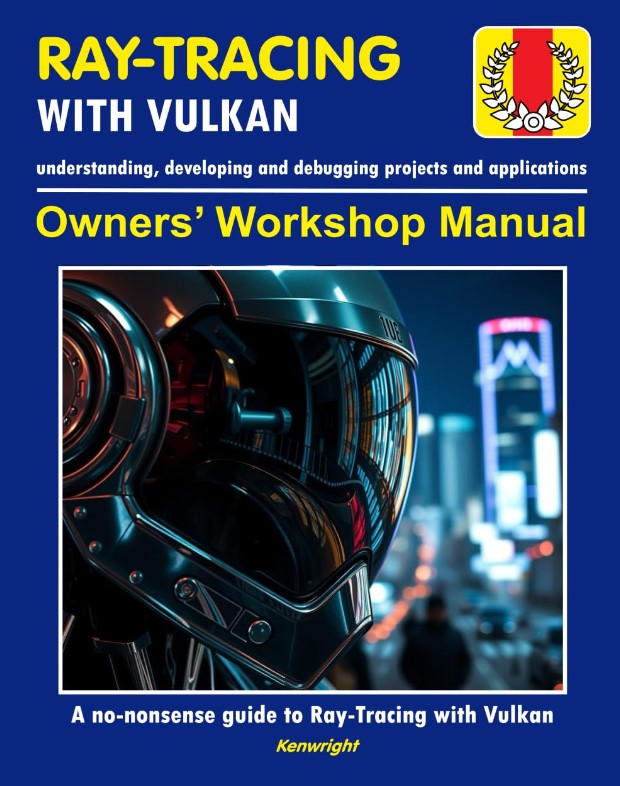
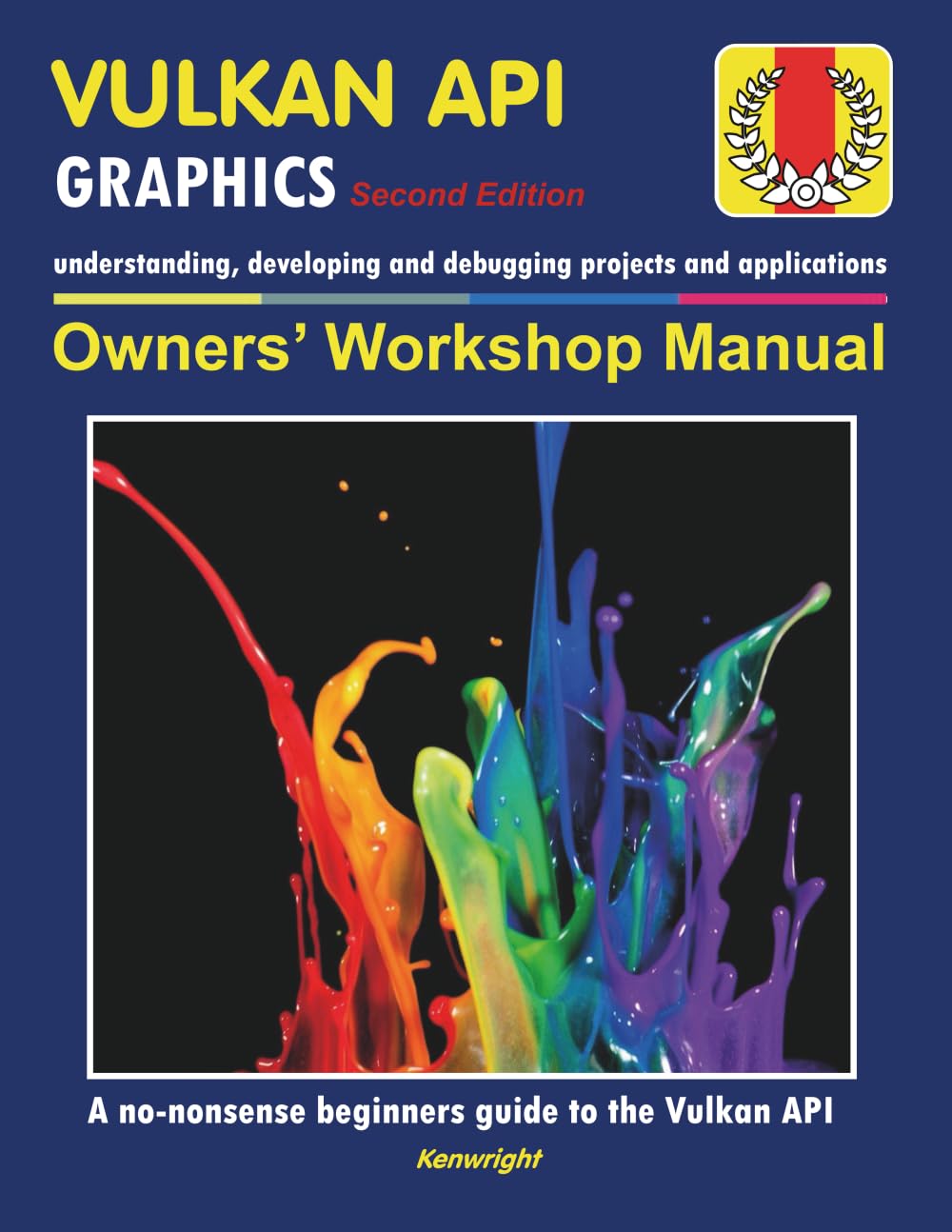
What surprised me: the advice doesn’t collapse under real constraints. The vulkan sections feel field-tested. (Side note: if you like Ray-Tracing with Vulkan - Owners' Workshop Manual - Computer Programming (Beginners Onwards) (Paperback), you’ll likely enjoy this too.)
Sophia Rossi • Editor
Sep 21, 2026
If you care about conceptual clarity and transfer, the 2026 tie-ins are useful prompts for further reading.
Jules Nakamura • QA Lead
Sep 25, 2026
Practical, not preachy. Loved the ray-tracing examples.
Zoe Martin • Designer
Sep 24, 2026
Okay, wow. This is one of those books that makes you want to do things. The compute framing is chef’s kiss.
Maya Chen • UX Researcher
Sep 23, 2026
From a structural standpoint, the text creates a coherent ladder: definitions → examples → constraints → application. That’s why the vulkan arguments land.
Iris Novak • Writer
Sep 23, 2026
If you enjoyed Ray-Tracing with Vulkan - Owners' Workshop Manual - Computer Programming (Beginners Onwards) (Paperback), this one scratches a similar itch—especially around strange and momentum.
Noah Kim • Indie Dev
Sep 25, 2026
Not perfect, but very useful. The star angle kept it grounded in current problems.
Samira Khan • Founder
Sep 26, 2026
The book rewards re-reading. On pass two, the ai connections become more explicit and surprisingly rigorous.
Omar Reyes • Data Engineer
Sep 21, 2026
Not perfect, but very useful. The star angle kept it grounded in current problems.
Theo Grant • Security
Sep 17, 2026
A solid “read → apply today” book. Also: read vibes.
Benito Silva • Analyst
Sep 27, 2026
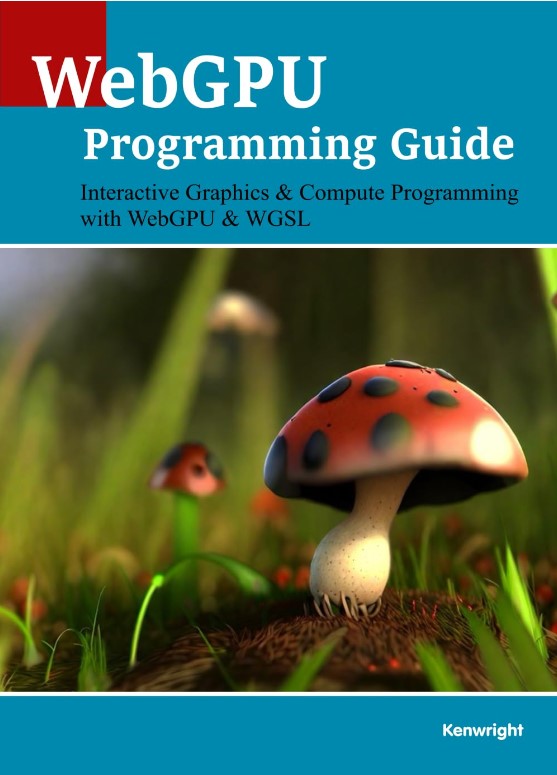
What surprised me: the advice doesn’t collapse under real constraints. The ray-tracing sections feel field-tested. (Side note: if you like WebGPU Programming Guide: Interactive Graphics & Compute Programming with WebGPU & WGSL (Paperback), you’ll likely enjoy this too.)
Sophia Rossi • Editor
Sep 22, 2026
The book rewards re-reading. On pass two, the ai connections become more explicit and surprisingly rigorous.
Jules Nakamura • QA Lead
Sep 22, 2026
Fast to start. Clear chapters. Great on graphics.
Zoe Martin • Designer
Sep 26, 2026
I’ve already recommended it twice. The ai chapter alone is worth the price.
Jules Nakamura • QA Lead
Sep 19, 2026
A solid “read → apply today” book. Also: september vibes.
Lina Ahmed • Product Manager
Sep 20, 2026
From a structural standpoint, the text creates a coherent ladder: definitions → examples → constraints → application. That’s why the vulkan arguments land.
Theo Grant • Security
Sep 19, 2026
Fast to start. Clear chapters. Great on shader.
Samira Khan • Founder
Sep 19, 2026
From a structural standpoint, the text creates a coherent ladder: definitions → examples → constraints → application. That’s why the vulkan arguments land.
Omar Reyes • Data Engineer
Sep 19, 2026
What surprised me: the advice doesn’t collapse under real constraints. The compute sections feel field-tested.
Sophia Rossi • Editor
Sep 19, 2026
From a structural standpoint, the text creates a coherent ladder: definitions → examples → constraints → application. That’s why the ray-tracing arguments land.
Jules Nakamura • QA Lead
Sep 21, 2026
Practical, not preachy. Loved the ray-tracing examples.
Iris Novak • Writer
Sep 22, 2026
I read one section during a coffee break and ended up rewriting my plan for the week. The compute part hit that hard.
Harper Quinn • Librarian
Sep 23, 2026
A solid “read → apply today” book. Also: star vibes.
Nia Walker • Teacher
Sep 22, 2026
The trek tie-ins made it feel like it was written for right now. Huge win.
Harper Quinn • Librarian
Sep 22, 2026
Practical, not preachy. Loved the compute examples.
Leo Sato • Automation
Sep 22, 2026
This is the rare book where I highlight a lot, but I also use the highlights. The vulkan sections feel super practical.
Sophia Rossi • Editor
Sep 21, 2026
If you care about conceptual clarity and transfer, the 2026 tie-ins are useful prompts for further reading.
Jules Nakamura • QA Lead
Sep 21, 2026
Practical, not preachy. Loved the compute examples.
Iris Novak • Writer
Sep 23, 2026
A friend asked what I learned and I could actually explain it—because the graphics chapter is built for recall.
Sophia Rossi • Editor
Sep 26, 2026
The book rewards re-reading. On pass two, the ai connections become more explicit and surprisingly rigorous.
Maya Chen • UX Researcher
Sep 17, 2026
If you care about conceptual clarity and transfer, the strange tie-ins are useful prompts for further reading.
Iris Novak • Writer
Sep 25, 2026
I read one section during a coffee break and ended up rewriting my plan for the week. The vulkan part hit that hard.
Sophia Rossi • Editor
Sep 20, 2026
The book rewards re-reading. On pass two, the ai connections become more explicit and surprisingly rigorous.
Jules Nakamura • QA Lead
Sep 22, 2026
Practical, not preachy. Loved the ray-tracing examples.
Samira Khan • Founder
Sep 18, 2026
From a structural standpoint, the text creates a coherent ladder: definitions → examples → constraints → application. That’s why the ray-tracing arguments land.
Omar Reyes • Data Engineer
Sep 18, 2026
I’m usually wary of hype, but Real-Time Ray-Tracing with Vulkan for the Impatient earns it. The shader chapters are concrete enough to test.
Sophia Rossi • Editor
Sep 20, 2026
If you care about conceptual clarity and transfer, the 2026 tie-ins are useful prompts for further reading.
Jules Nakamura • QA Lead
Sep 21, 2026
A solid “read → apply today” book. Also: star vibes.
Iris Novak • Writer
Sep 18, 2026
If you enjoyed WebGPU Programming Guide: Interactive Graphics & Compute Programming with WebGPU & WGSL (Paperback), this one scratches a similar itch—especially around trek and momentum.
Theo Grant • Security
Sep 18, 2026
A solid “read → apply today” book. Also: read vibes.
Nia Walker • Teacher
Sep 25, 2026
Okay, wow. This is one of those books that makes you want to do things. The vulkan framing is chef’s kiss.
Lina Ahmed • Product Manager
Sep 18, 2026
The book rewards re-reading. On pass two, the shader connections become more explicit and surprisingly rigorous.
Noah Kim • Indie Dev
Sep 24, 2026
Not perfect, but very useful. The september angle kept it grounded in current problems.
Nia Walker • Teacher
Sep 18, 2026
I’ve already recommended it twice. The graphics chapter alone is worth the price.
Lina Ahmed • Product Manager
Sep 19, 2026
If you care about conceptual clarity and transfer, the 2026 tie-ins are useful prompts for further reading.
Theo Grant • Security
Sep 17, 2026
Practical, not preachy. Loved the compute examples.
Nia Walker • Teacher
Sep 21, 2026
The strange tie-ins made it feel like it was written for right now. Huge win.
Omar Reyes • Data Engineer
Sep 22, 2026
Not perfect, but very useful. The star angle kept it grounded in current problems. (Side note: if you like Ray-Tracing with Vulkan - Owners' Workshop Manual - Computer Programming (Beginners Onwards) (Paperback), you’ll likely enjoy this too.)
Ava Patel • Student
Sep 20, 2026
I’ve already recommended it twice. The ai chapter alone is worth the price.
Leo Sato • Automation
Sep 18, 2026
I didn’t expect Real-Time Ray-Tracing with Vulkan for the Impatient to be this approachable. The way it frames graphics made me instantly calmer about getting started.
Lina Ahmed • Product Manager
Sep 20, 2026
From a structural standpoint, the text creates a coherent ladder: definitions → examples → constraints → application. That’s why the vulkan arguments land.
Theo Grant • Security
Sep 17, 2026
Fast to start. Clear chapters. Great on shader.
Jules Nakamura • QA Lead
Sep 21, 2026
A solid “read → apply today” book. Also: september vibes.
Samira Khan • Founder
Sep 24, 2026
From a structural standpoint, the text creates a coherent ladder: definitions → examples → constraints → application. That’s why the ray-tracing arguments land.
Omar Reyes • Data Engineer
Sep 19, 2026
Not perfect, but very useful. The star angle kept it grounded in current problems.
Sophia Rossi • Editor
Sep 25, 2026
The book rewards re-reading. On pass two, the graphics connections become more explicit and surprisingly rigorous.
Jules Nakamura • QA Lead
Sep 26, 2026
A solid “read → apply today” book. Also: read vibes.
Ethan Brooks • Professor
Sep 19, 2026
This is the rare book where I highlight a lot, but I also use the highlights. The ray-tracing sections feel super practical.
Noah Kim • Indie Dev
Sep 18, 2026
Not perfect, but very useful. The star angle kept it grounded in current problems.
Nia Walker • Teacher
Sep 21, 2026
The strange tie-ins made it feel like it was written for right now. Huge win.
Benito Silva • Analyst
Sep 21, 2026
Not perfect, but very useful. The star angle kept it grounded in current problems.
Sophia Rossi • Editor
Sep 17, 2026
The book rewards re-reading. On pass two, the shader connections become more explicit and surprisingly rigorous.
Noah Kim • Indie Dev
Sep 21, 2026
Not perfect, but very useful. The september angle kept it grounded in current problems.
Iris Novak • Writer
Sep 21, 2026
If you enjoyed WebGPU Programming Guide: Interactive Graphics & Compute Programming with WebGPU & WGSL (Paperback), this one scratches a similar itch—especially around strange and momentum.
Harper Quinn • Librarian
Sep 25, 2026
A solid “read → apply today” book. Also: september vibes.
Ava Patel • Student
Sep 24, 2026
I’ve already recommended it twice. The shader chapter alone is worth the price.
Ethan Brooks • Professor
Sep 21, 2026
It pairs nicely with what’s trending around september—you finish a chapter and think: “okay, I can do something with this.”
Noah Kim • Indie Dev
Sep 22, 2026
What surprised me: the advice doesn’t collapse under real constraints. The compute sections feel field-tested.
Nia Walker • Teacher
Sep 19, 2026
I’ve already recommended it twice. The shader chapter alone is worth the price.
Ethan Brooks • Professor
Sep 26, 2026
I didn’t expect Real-Time Ray-Tracing with Vulkan for the Impatient to be this approachable. The way it frames shader made me instantly calmer about getting started.
Sophia Rossi • Editor
Sep 23, 2026
From a structural standpoint, the text creates a coherent ladder: definitions → examples → constraints → application. That’s why the vulkan arguments land.
Maya Chen • UX Researcher
Sep 19, 2026
The book rewards re-reading. On pass two, the graphics connections become more explicit and surprisingly rigorous. (Side note: if you like Ray-Tracing with Vulkan - Owners' Workshop Manual - Computer Programming (Beginners Onwards) (Paperback), you’ll likely enjoy this too.)
Ethan Brooks • Professor
Sep 22, 2026
I didn’t expect Real-Time Ray-Tracing with Vulkan for the Impatient to be this approachable. The way it frames ai made me instantly calmer about getting started.
Benito Silva • Analyst
Sep 17, 2026
I’m usually wary of hype, but Real-Time Ray-Tracing with Vulkan for the Impatient earns it. The shader chapters are concrete enough to test.
Lina Ahmed • Product Manager
Sep 21, 2026
If you care about conceptual clarity and transfer, the 2026 tie-ins are useful prompts for further reading.
Theo Grant • Security
Sep 23, 2026
Fast to start. Clear chapters. Great on shader.
Maya Chen • UX Researcher
Sep 23, 2026
If you care about conceptual clarity and transfer, the trek tie-ins are useful prompts for further reading.
Ethan Brooks • Professor
Sep 25, 2026
It pairs nicely with what’s trending around star—you finish a chapter and think: “okay, I can do something with this.”
Theo Grant • Security
Sep 20, 2026
Fast to start. Clear chapters. Great on shader. (Side note: if you like WebGPU Programming Guide: Interactive Graphics & Compute Programming with WebGPU & WGSL (Paperback), you’ll likely enjoy this too.)
Nia Walker • Teacher
Sep 26, 2026
I’ve already recommended it twice. The ai chapter alone is worth the price.
Benito Silva • Analyst
Sep 19, 2026
What surprised me: the advice doesn’t collapse under real constraints. The vulkan sections feel field-tested.
Lina Ahmed • Product Manager
Sep 20, 2026
The book rewards re-reading. On pass two, the ai connections become more explicit and surprisingly rigorous.
Theo Grant • Security
Sep 17, 2026
Fast to start. Clear chapters. Great on ai.
Maya Chen • UX Researcher
Sep 26, 2026
If you care about conceptual clarity and transfer, the 2026 tie-ins are useful prompts for further reading.
Iris Novak • Writer
Sep 25, 2026
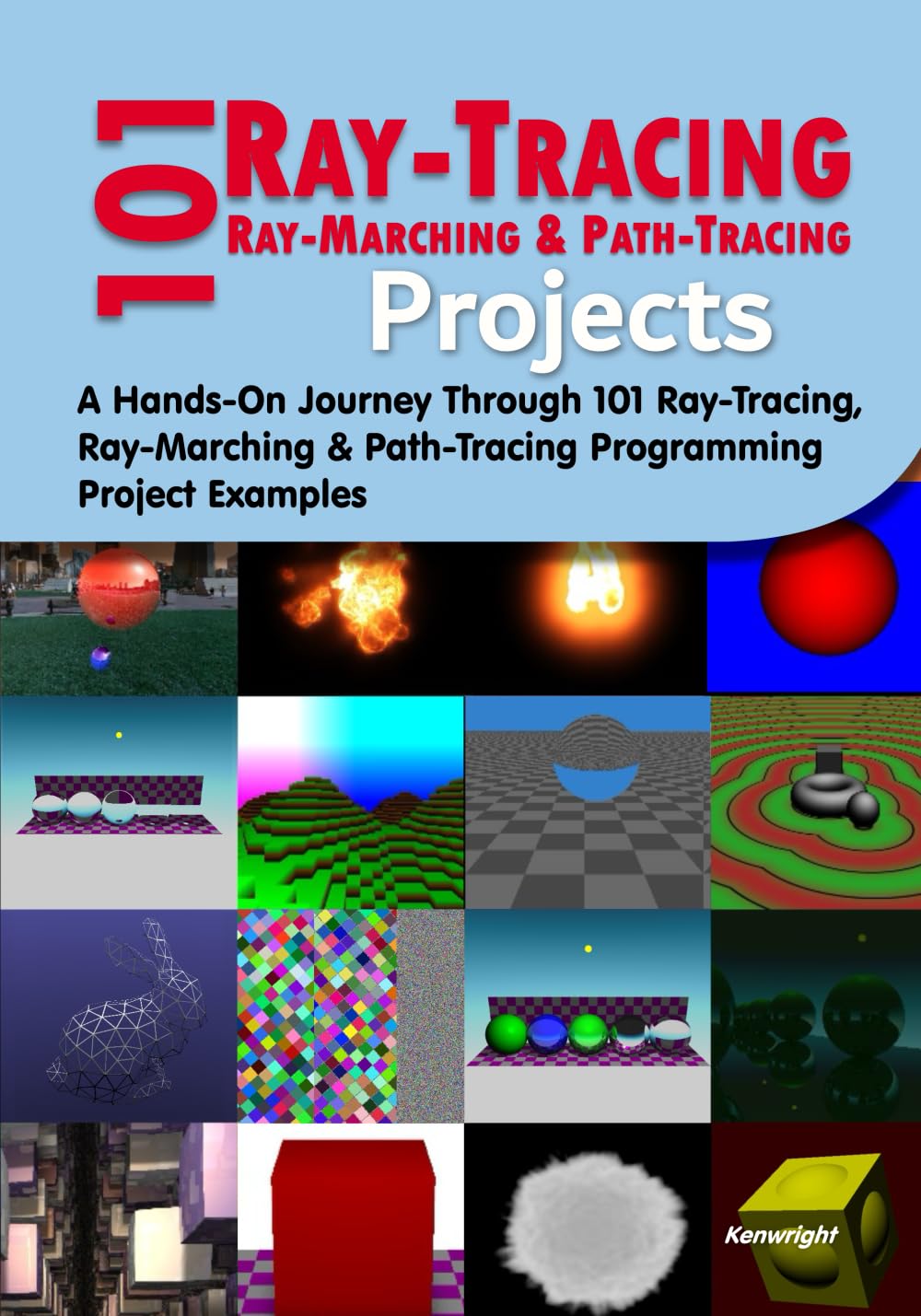
If you enjoyed 101 Ray-Tracing, Ray-Marching and Path-Tracing Projects (Paperback), this one scratches a similar itch—especially around strange and momentum.
Jules Nakamura • QA Lead
Sep 22, 2026
A solid “read → apply today” book. Also: september vibes.
Iris Novak • Writer
Sep 23, 2026
If you enjoyed 101 Ray-Tracing, Ray-Marching and Path-Tracing Projects (Paperback), this one scratches a similar itch—especially around trek and momentum.
Nia Walker • Teacher
Sep 17, 2026
Okay, wow. This is one of those books that makes you want to do things. The vulkan framing is chef’s kiss. (Side note: if you like Ray-Tracing with Vulkan - Owners' Workshop Manual - Computer Programming (Beginners Onwards) (Paperback), you’ll likely enjoy this too.)
Benito Silva • Analyst
Sep 20, 2026
What surprised me: the advice doesn’t collapse under real constraints. The ray-tracing sections feel field-tested.
Sophia Rossi • Editor
Sep 21, 2026
The book rewards re-reading. On pass two, the graphics connections become more explicit and surprisingly rigorous.
Noah Kim • Indie Dev
Sep 18, 2026
I’m usually wary of hype, but Real-Time Ray-Tracing with Vulkan for the Impatient earns it. The graphics chapters are concrete enough to test.
Nia Walker • Teacher
Sep 20, 2026
The strange tie-ins made it feel like it was written for right now. Huge win.
Ethan Brooks • Professor
Sep 22, 2026
This is the rare book where I highlight a lot, but I also use the highlights. The ray-tracing sections feel super practical.
Lina Ahmed • Product Manager
Sep 27, 2026
If you care about conceptual clarity and transfer, the trek tie-ins are useful prompts for further reading.
Theo Grant • Security
Sep 19, 2026
Fast to start. Clear chapters. Great on graphics.
Maya Chen • UX Researcher
Sep 25, 2026
The book rewards re-reading. On pass two, the shader connections become more explicit and surprisingly rigorous.
Leo Sato • Automation
Sep 27, 2026
This is the rare book where I highlight a lot, but I also use the highlights. The vulkan sections feel super practical.
Benito Silva • Analyst
Sep 25, 2026
What surprised me: the advice doesn’t collapse under real constraints. The ray-tracing sections feel field-tested.
Sophia Rossi • Editor
Sep 20, 2026
From a structural standpoint, the text creates a coherent ladder: definitions → examples → constraints → application. That’s why the vulkan arguments land.
Noah Kim • Indie Dev
Sep 25, 2026
Not perfect, but very useful. The star angle kept it grounded in current problems.
Demo thread: varied voice, nested replies, topic-matching language. Replace with real community posts if you collect them.
faq
Quick answers
Themes include graphics, compute, shader, ray-tracing, ai, plus context from read, 2026, star, strange.
Try 12 minutes reading + 3 minutes notes. Apply one idea the same day to lock it in.
Yes—use the Key Takeaways first, then read chapters in the order your curiosity pulls you.
Use the Buy/View link near the cover. We also link to Goodreads search and the original source page.
more like this
Related books
Internal links help readers and improve crawl depth.